‹
›
›
‹
×
![]()
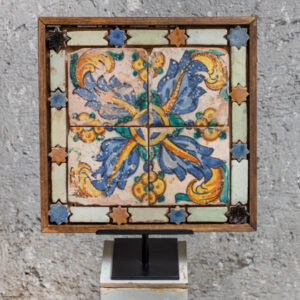
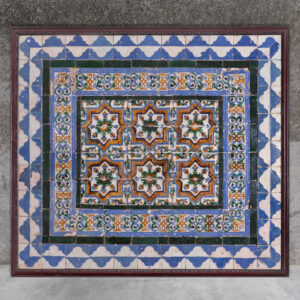
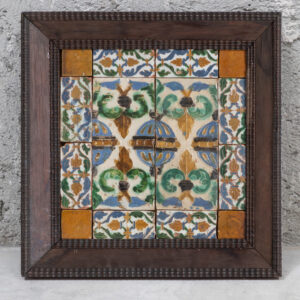
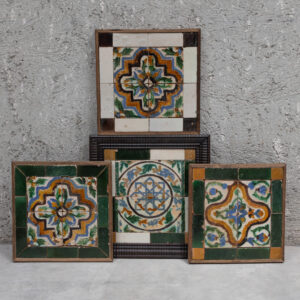
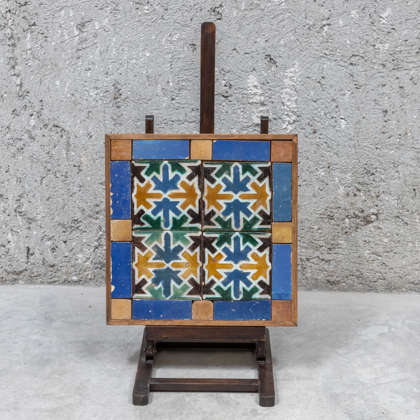
Composition of Hispano-Moorish Tiles with Enxarquetados – 15th–16th Centuries
Period: 15th–16th centuries
Dimensions: 42 x 42 cm
Description:
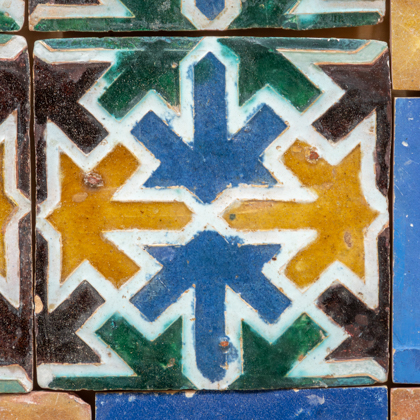
A 15th–16th-century Hispano-Moorish tile composition consisting of four central tiles with geometric patterns, framed by interlacing elements in blue, green, and shades of honey. The central motif is developed through the repetition of star-shaped forms and geometric interlacing, combining polychrome glazes separated by raised lines, characteristic of the “aresta” technique. The border, formed by small ceramic pieces of various shapes and colors, creates a geometric frame that complements the central design.
Hispano-Moorish tilework developed in the Iberian Peninsula from the Islamic artistic tradition, remaining a significant craft throughout the 15th and 16th centuries, particularly in ceramic centers such as Seville. Geometry played a fundamental role in this decorative tradition, through repetition, symmetry, and the combination of forms that made it possible to create architectural coverings of great visual complexity. The “aresta” technique, based on the use of molds that produced raised dividers to separate the glazes, facilitated the reproduction of polychrome patterns and their application in palaces, religious buildings, and domestic spaces. This composition brings together two characteristic expressions of Iberian ceramics from this period: patterned tiles and the geometric framing of the Hispano-Moorish tradition.Are you interested in this product?