‹
›
›
‹
×
![]()
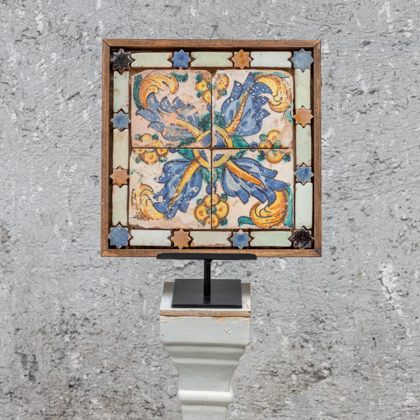
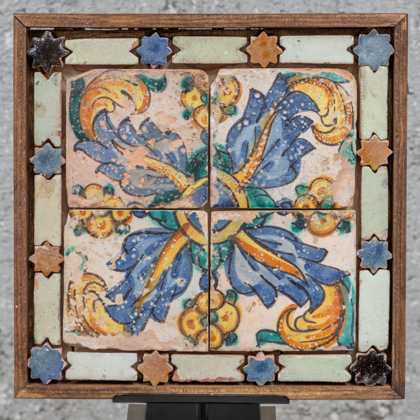
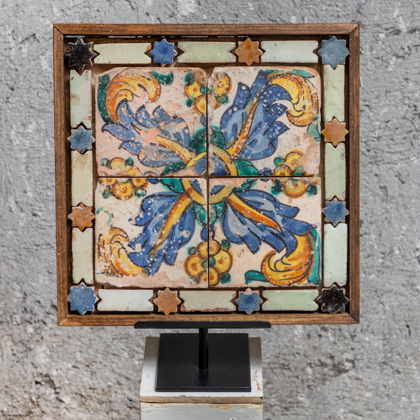
Composition of Spanish Tiles with Enxarquetados and Alicatados – 17th Century
Period: 15th–17th centuries
Dimensions: 31 x 31 cm
Description:
A composition of 17th-century Spanish tiles, featuring four polychrome majolica tiles in the center, with a floral design in blue, green, yellow, and ochre on a white background. The leaf and scroll motifs interweave among the four tiles, forming a Renaissance-inspired composition. The ensemble is framed by geometric elements of various shapes, including stars and rectangular pieces, associated with the traditions of “enxarquetados” and “alicatados.”
The composition brings together two technical traditions of Iberian tilework. The central tiles were crafted using the majolica technique, which involves applying metallic pigments over a white glaze opacified with tin, allowing for the direct painting of figurative and ornamental motifs. The geometric elements of the border draw on the alicatado technique, of Islamic origin, in which pre-glazed ceramic pieces were cut into different shapes and later assembled to create geometric compositions. This tradition, which developed in the Iberian Peninsula during the medieval period, remained a feature of decorative production in the centuries that followed, attesting to the continued influence of Islamic art on Spanish ceramics.Are you interested in this product?